
What to Look For When Buying Honey
Buying honey should be simple, but labels can be vague, origins can be unclear, and some jars are far more processed than people realise. Knowing what to look for helps you buy with confidence and support genuine British beekeepers.
Check the label carefully
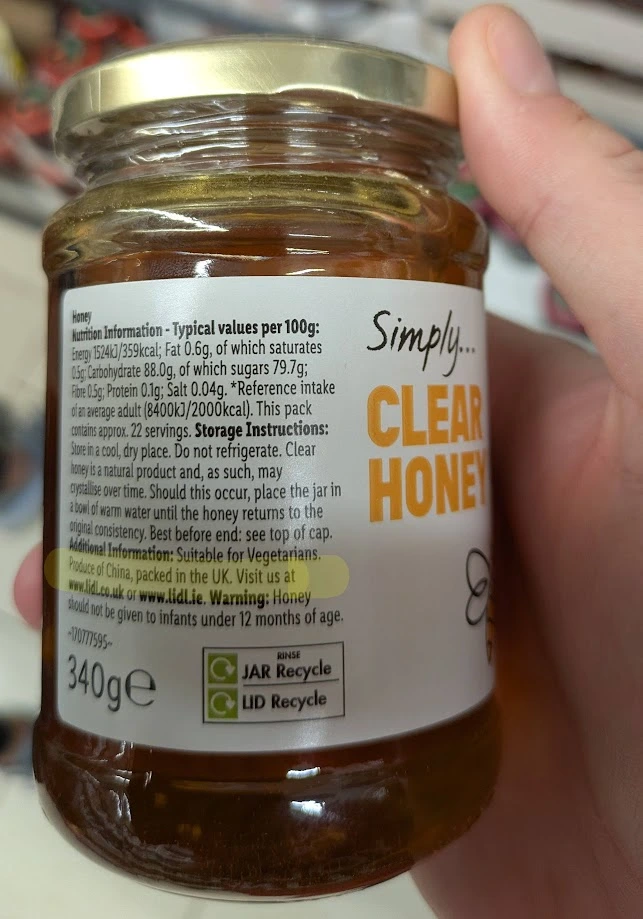
When buying honey, look for clear origin information. A named beekeeper, apiary, or specific location is a good sign. Be cautious of wording like “blend of EU and non-EU honeys”, which usually means the honey has been imported and mixed.
Don’t be put off by crystallisation
Real honey often sets over time, especially spring and oilseed rape honeys. Crystallisation is natural and does not mean the honey has gone bad. In many cases, it is a reassuring sign that the honey has not been overly processed.
Pay attention to taste and aroma
Genuine honey has character. Depending on the flowers visited by the bees, it may taste floral, fruity, herbal, woody, or rich and deep. If a honey tastes one-dimensional and simply sugary, it may not be telling the full story.
Consider price and provenance
Cheap honey is often cheap for a reason. Local honey costs more because it is produced on a smaller scale, handled with care, and traceable back to the beekeeper. When buying honey, provenance matters just as much as price.
Ask questions if you can
One of the best things about buying direct is that you can ask where the hives are, what forage is nearby, and how the honey is extracted and jarred. That level of traceability is hard to beat.
Buy from someone you trust
The easiest way to feel confident when buying honey is to buy from a trusted local beekeeper. You are far more likely to get authentic honey with a clear origin, a real story, and a genuine connection to place.
Buying honey locally makes all the difference
If you want honey that is traceable, properly labelled, and connected to a real landscape and beekeeper, buying local is one of the simplest and best choices you can make.